KNOWLEDGE BAG OF BIOCHEMISTRY

Saturday, 30 May 2015

Researchers engineer E. coli to produce new forms of popular antibiotic


In Science Advances, University at Buffalo researchers will report that they have managed to turn E. coli into tiny factories for producing new forms of the popular antibiotic erythromycin -- including three that were shown in the lab to kill drug-resistant bacteria.

    ter disks holding The white filantibiotics sit on petri dishes housing erythromycin-resistant Bacillus subtilis. The filter disks circled in red hold new forms of erythromycin created by University at Buffalo researchers, and the dark halo around them indicates that the drug has seeped out of the disk to kill the surrounding bacteria.

Like a dairy farmer tending to a herd of cows to produce milk, researchers are tending to colonies of the bacteriaEscherichia coli (E. coli) to produce new forms of antibiotics -- including three that show promise in fighting drug-resistant bacteria.
The research, which will be published May 29 in the journalScience Advances, was led by Blaine A. Pfeifer, an associate professor of chemical and biological engineering in the University at Buffalo School of Engineering and Applied Sciences. His team included first author Guojian Zhang, Yi Li and Lei Fang, all in the Department of Chemical and Biological Engineering.
For more than a decade, Pfeifer has been studying how to engineer E. coli to generate new varieties of erythromycin, a popular antibiotic. In the new study, he and colleagues report that they have done this successfully, harnessing E. coli to synthesize dozens of new forms of the drug that have a slightly different structure from existing versions.
Three of these new varieties of erythromycin successfully killed bacteria of the species Bacillus subtilis that were resistant to the original form of erythromycin used clinically.
'We're focused on trying to come up with new antibiotics that can overcome antibiotic resistance, and we see this as an important step forward,' said Pfeifer, Ph.D.
'We have not only created new analogs of erythromycin, but also developed a platform for using E. coli to produce the drug,' he said. 'This opens the door for additional engineering possibilities in the future; it could lead to even more new forms of the drug.'
The study is especially important with antibiotic resistance on the rise. Erythromycin is used to treat a variety of illnesses, from pneumonia and whooping cough to skin and urinary tract infections.
E. coli as a factory
Getting E. coli to produce new antibiotics has been something of a holy grail for researchers in the field.
That's because E. coli grows rapidly, which speeds experimental steps and aids efforts to develop and scale up production of drugs. The species also accepts new genes relatively easily, making it a prime candidate for engineering.
While news reports often focus on the dangers of E. coli, most types of this bacteria are actually harmless, including those used by Pfeifer's team in the lab.
Over the past 11 years, Pfeifer's research has focused on manipulating E. coli so that the organism produces all of the materials necessary for creating erythromycin. You can think of this like stocking a factory with all the necessary parts and equipment for building a car or a plane.
With that phase of the research complete, Pfeifer has turned to the next goal: Tweaking the way his engineered E. coli produce erythromycin so that the drug they make is slightly different than versions used in hospitals today.
That's the topic of the new Science Advances paper.
The process of creating erythromycin begins with three basic building blocks called metabolic precursors -- chemical compounds that are combined and manipulated through an assembly line-like process to form the final product, erythromycin.
To build new varieties of erythromycin with a slightly different shape, scientists can theoretically target any part of this assembly line, using various techniques to affix parts with structures that deviate slightly from the originals. (On an assembly line for cars, this would be akin to screwing on a door handle with a slightly different shape.)
In the new study, Pfeifer's team focused on a step in the building process that had previously received little attention from researchers, a step near the end.
The researchers focused on using enzymes to attach 16 different shapes of sugar molecules to a molecule called 6-deoxyerythronolide B. Every one of these sugar molecules was successfully adhered, leading, at the end of the assembly line, to more than 40 new analogs of erythromycin -- three of which showed an ability to fight erythromycin-resistant bacteria in lab experiments.
'The system we've created is surprisingly flexible, and that's one of the great things about it,' Pfeifer said. 'We have established a platform for using E. coli to produce erythromycin, and now that we've got it, we can start altering it in new ways.'

What are cranial neuralgias, facial pain, and other headaches?


Neuralgia means nerve pain (neur= nerve + algia=pain). Cranial neuralgia describes inflammation of one of the 12 nerves that supply the motor and sensation function of the head and neck. Perhaps the most commonly recognized example is trigeminal neuralgia, which affects cranial nerve V (the trigeminal nerve) and can cause intense facial pain.

What causes tension headaches?


While tension headaches are the most frequently occurring type of headache, their cause is not known. The most likely cause is contraction of the muscles that cover the skull. When the muscles covering the skull are stressed, they may become inflamed, go into spasm, and cause pain. Common sites include the base of the skull where the trapezius muscles of the neck insert, the temples where muscles that move the jaw are located, and the forehead.
There is little research to confirm the exact cause of tension headaches. Tension headaches occur because of physical or emotional stress placed on the body. For example, these stressors can cause the muscles surrounding the skull to clench the teeth and go into spasm. Physical stressors include difficult and prolonged manual labor, or sitting at a desk or computer for long periods of time concentrating. Emotional stress also may cause tension headaches by causing the muscles surrounding the skull to contract.

What are the symptoms of tension headaches?

Common presentation of tension headaches includes the following:
  • Pain that begins in the back of the head and upper neck and is described as a band-like tightness or pressure. It may spread to encircle the head.
  • The most intense pressure may be felt at the temples or over the eyebrows.
  • The pain can vary in intensity but usually is not disabling, meaning that the sufferer may continue with daily activities. The pain usually is bilateral (affecting both sides of the head).
  • The pain is not associated with an aura (see below), nausea, vomiting, or sensitivity to light and sound.
  • The pain occurs sporadically (infrequently and without a pattern) but can occur frequently and even daily in some people.
  • The pain allows most people to function normally, despite the headache
  • How are tension headaches diagnosed?

    The key to making the diagnosis of any headache is the history given by the patient. The health care professional will ask questions about the headache to try to help make the diagnosis. Those questions may include learning about the quality, quantity, and duration of the pain, and asking about any associated symptoms. The person with a tension headache will usually complain of pain that is mild-to-moderate, located on both sides of the head, described as a tightness that is not throbbing, and not made worse with activity. There will be no associated symptoms like nausea, vomiting, or light sensitivity.

Monday, 25 May 2015

Biomedical sensors for disease detection made simple

Researchers have made a new protein detection platform using low-cost plastic and paper substrates. Their work could help reduce the cost and improve the accuracy of infectious disease diagnosis, they say.


Researchers in Korea have succeeded in making a new protein detection platform using low-cost plastic and paper substrates. Their work could help reduce the cost and improve the accuracy of infectious disease diagnosis.

Healthcare researchers are increasingly focused on the early detection and prevention of illnesses. Early and accurate diagnosis is vital, especially for people in developing countries where infectious diseases are the leading cause of death. One way to achieve early detection is by developing simple biomedical sensors.
One challenge, however, is to ensure that biomedical sensors are environmentally stable, disposable and cost-effective. Current biosensors are made of glass or very expensive. substrates that make it difficult to broaden their use and mobility in diagnostic and research areas.
Tackling the issue of expensive substrates, a research team at the Korea Advanced Institute of Science and Technology (KAIST) has developed a new protein detection platform that can be used with paper substrates. Not only is a paper substrate incredibly flexible and simple to handle, it is also 1,000 times less costly than the traditional glass substrate and 100 times less expensive than plastic substrates.
Called "initiated chemical vapour deposition" (iCVD), this process can cover surfaces without damaging substrates and can successfully immobilise proteins (such as fluorescent proteins or antibody fragments) that may indicate the presence, for example, of pathogens. Unlike previous methods, the iCVD process does not require solvents and therefore is much better at binding to different surfaces without degrading them.
So far, the KAIST team has successfully used the iCVD process not only on traditional substrates like glass, but also on flexible and low-cost alternatives such as paper and polyethylene films. The researchers hope this new technology will provide a cost-efficient platform to reduce the manufacturing costs of protein biochips. Further research will continue in 2015, they say, to improve the performance and operation of the paper-based biochip.


Wednesday, 1 April 2015

"HEPATITIS a Viral Disease & its Types"


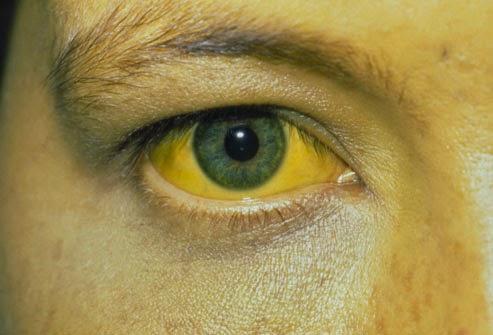
What Is Hepatitis?

Hepatitis is an inflammation of the liver. It may be caused by drugs, alcohol use, or certain medical conditions. But in most cases, it's caused by a virus. This is known as viral hepatitis, and the most common forms are hepatitis A, B, and C.

Difference between Hepatitis B & C

Hepatitis B and C have some similarities to each other, but also a number of important differences.  Like any form of hepatitis they both attack the liver, sometimes causing serious liver damage. They can both be transmitted by blood to blood contact with an infected person.  They are both treatable with medication, which is improving all the time and this means that those infected with either hepatitis B or C can usually live a long and healthy life with a few lifestyle changes.  There are similarities in the some of the ways in which you might become infected, including sharing needles or equipment used to inject drugs (including steroids); through infected blood products; passed on from mother to child and more.

However, there are also a number of important differences between hepatitis B and hepatitis C.

Transmission

Hepatitis C can only be transmitted through blood to blood contact with an infected person. Only in extremely rare cases can it be passed on through bodily fluids (there have been some reports of men co-infected with HIV passing on hepatitis C during sex).  In Scotland the most common means of transmission of hepatitis C is sharing equipment used for injecting drug use.

 If you have been infected with hepatitis C and successfully cleared the virus - this does not mean that you are now immune and cannot be re-infected.  You can be re-infected with the same strain again, or infected with more than one strain at any given time

Hepatits B can be transmitted through blood to blood contact, but is more commonly transmitted through bodily fluids - particularly during sex. In Scotland the most common means of transmission is mother to child transmission during birth.  All pregnant mothers in Scotland are now screened for hepatitis B because if the mother is infected, it is very important that a child receive the hepatitis B vaccine at birth to give the best chance of protecting against a lifelong hepatitis B infection.

If you have previously been infected with hepatitis B and successfully cleared the virus you are now immune and cannot become infected again.

Vaccines and Treatment

There is no vaccine for hepatitis C, but there are now very effective treatments which can cure up to 80% of those infected depending on the strain of the virus they have.  Around 20% of those who are infected with hepatitis C clear the infection naturally during the acute phase (first six months) and do not develop a chronic infection requiring treatment.

There is a vaccine for hepatitis B which can prevent you from becoming infected.  However, for those who develop a chronic infection - there is no medical cure.  You may be able to live a healthy life with the virus not severly damaging your liver, or you may require treatment to keep the virus under control.  95% of those infected with hepatitis B as adults clear the virus naturally. However, 90% of children infected under 12 months of age who do not receive the vaccine will develop a chronic/lifelong infection.